
Methane: where it was proven in the field
Methane detection disagrees by design. SensorUp reconciles satellite, continuous, OGI, and SCADA signals into one number that holds up under Subpart W audit.
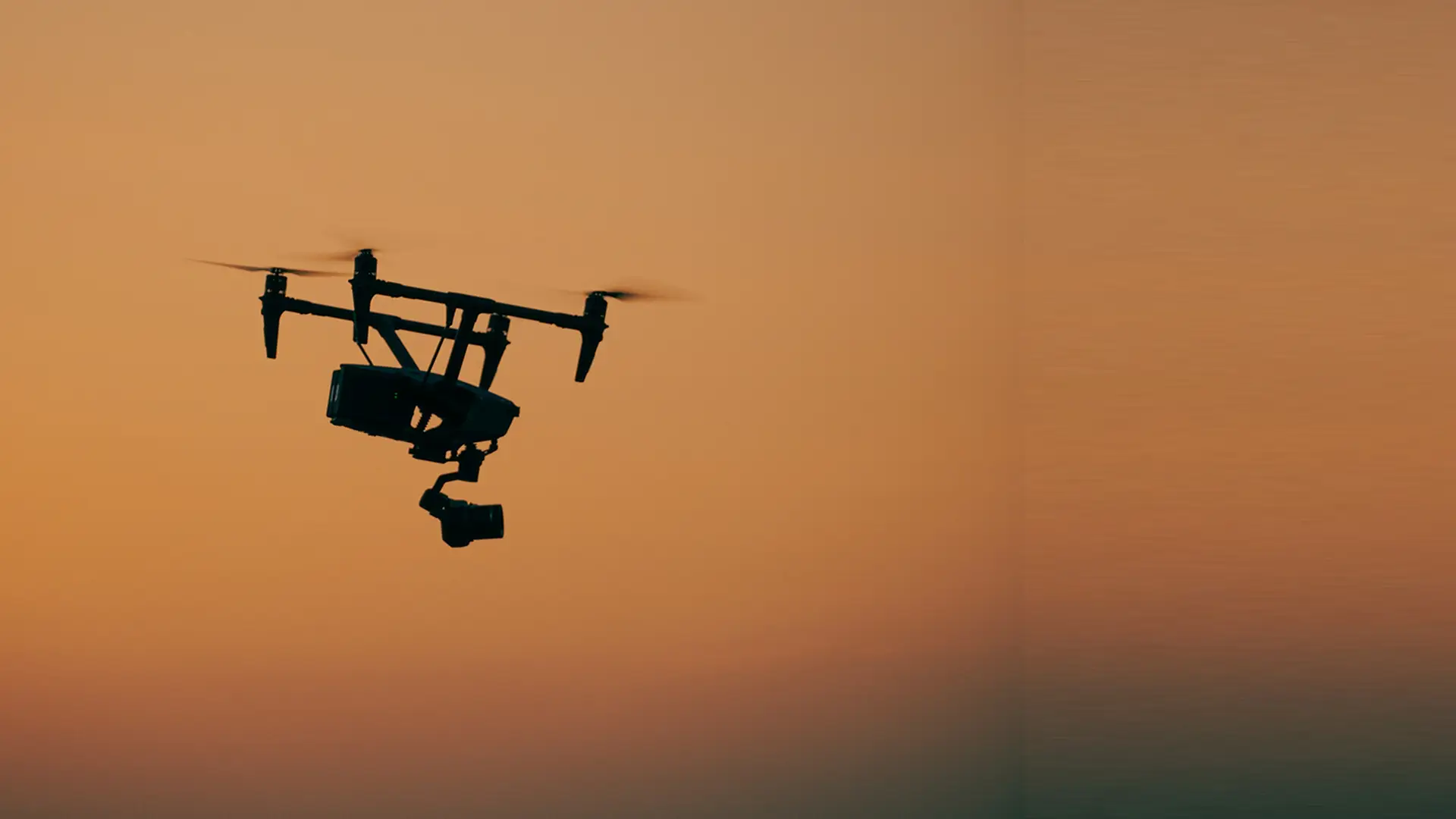
Four right answers about four different things. None of them, alone, is the number you submit.
Every detection device ships with its own portal
Five vendors, five alert streams, none aware of the others.
Five vendors means five alert streams, each unaware of the others, so the same event arrives three times under three names and a crew rolls on each. The real super-emitter waits in the queue behind the duplicates.
The number used for reports is built by hand, and no one can audit it
Reconciliation happens in a spreadsheet nobody else can audit.
Reconciliation happens in a spreadsheet: CSV exports, manual joins, one analyst's judgment in formulas nobody else can audit. When the regulator asks where a value came from, the answer is a recollection, not a record.
The leak is confirmed, but does the work happen?
A real finding becomes an email, then a row, owned by no one.
Even once the real super-emitter is separated from the noise, the finding becomes an email and the email becomes a spreadsheet row, and ownership never lands on anyone. Weeks later, no one can show who was assigned, when they acted, or against which detection.
Fits your stack
We use your detection technology
Every detection lands in one model, tied to the asset underneath it
Satellite, continuous, and OGI stop living in separate portals.
Satellite (GHGSat, MethaneSAT), continuous monitors (Project Canary, Qube, LongPath), and OGI cameras ingest as observations tied to the equipment under them. A pass arrives as a candidate event on your asset hierarchy, not a PDF in an inbox, and survey- and sensor-based detection stop living in separate systems.
consume: GHGSat, MethaneSAT, Canary, Qube, OGIOperational state arrives with the detection, not after it
Pressure, flow, and valve state sit beside every detection.
The Warehouse reads your SCADA historians (PI, CygNet) over OPC-UA and Modbus, so pressure, flow, and valve state sit beside every detection, separating a leak from a scheduled vent before a truck rolls. Ingress is pull-shaped, so nothing new lands on the OT segment.
consume: PI, CygNet ← OPC-UA / ModbusThe methane frameworks are already in the Library
OGMP 2.0, Super Emitter Response, and the factors behind them are Library content.
The methodologies your reconciled number answers to, OGMP 2.0 at L4/L5, the Super Emitter Response Program, and the emission factors behind them, are Reference Library content: versioned, inspectable, and applied the same way every cycle.
frameworks: OGMP 2.0, Super Emitter Response ← LibraryCatch → Prioritize → Resolve
Different signals become one defensible number
One event with every detection that saw it
A scheduled vent is classified as a vent before anyone drives.
Autopilot correlates a satellite alert with the continuous-monitor reading and the SCADA anomaly underneath it, under supervision, and cross-references operational state, so a scheduled vent is classified as a vent before anyone drives anywhere.
One number your engineers defend and your auditors accept
Calculations derive from observations in the open, ranked against the plan.
Calculations derive from observations in the open, not a spreadsheet's hidden formulas, reconciling bottom-up inventory against top-down measurement to an OGMP 2.0 L4/L5 number. Every derived value keeps its lineage to the readings beneath it.
An outcome you can defend from the source to the submitted number
A confirmed event becomes owned work, closed and recorded with lineage an auditor accepts.
A confirmed event resolves to a named owner: the repair order, the follow-up survey, the closure. Every change is recorded, and Ledgers keeps custody from sensor calibration to submitted value. When the auditor asks where a number came from, the answer is a record: instrument, timestamp, transformation, approver.
The building blocks
Methane is composed from the same blocks
Methane is not a separate product. It is composed in Studio from the same blocks every solution uses, run by Autopilot on the Warehouse beneath it, assembled for your stack per deployment. The same pattern runs the LDAR program and every solution in the catalog, and the reconciled number reports out through OGMP 2.0.
- Events
- Work
- Calculations
- Compliance
- Scenarios
- Metrics
- Reports
- Agents
- Cora
- Solution Builder
- Workflows
- Assets
- Integrations
- Datasets
- Relationships
- Reference Library
- Ledgers
- Approvals
See it in action
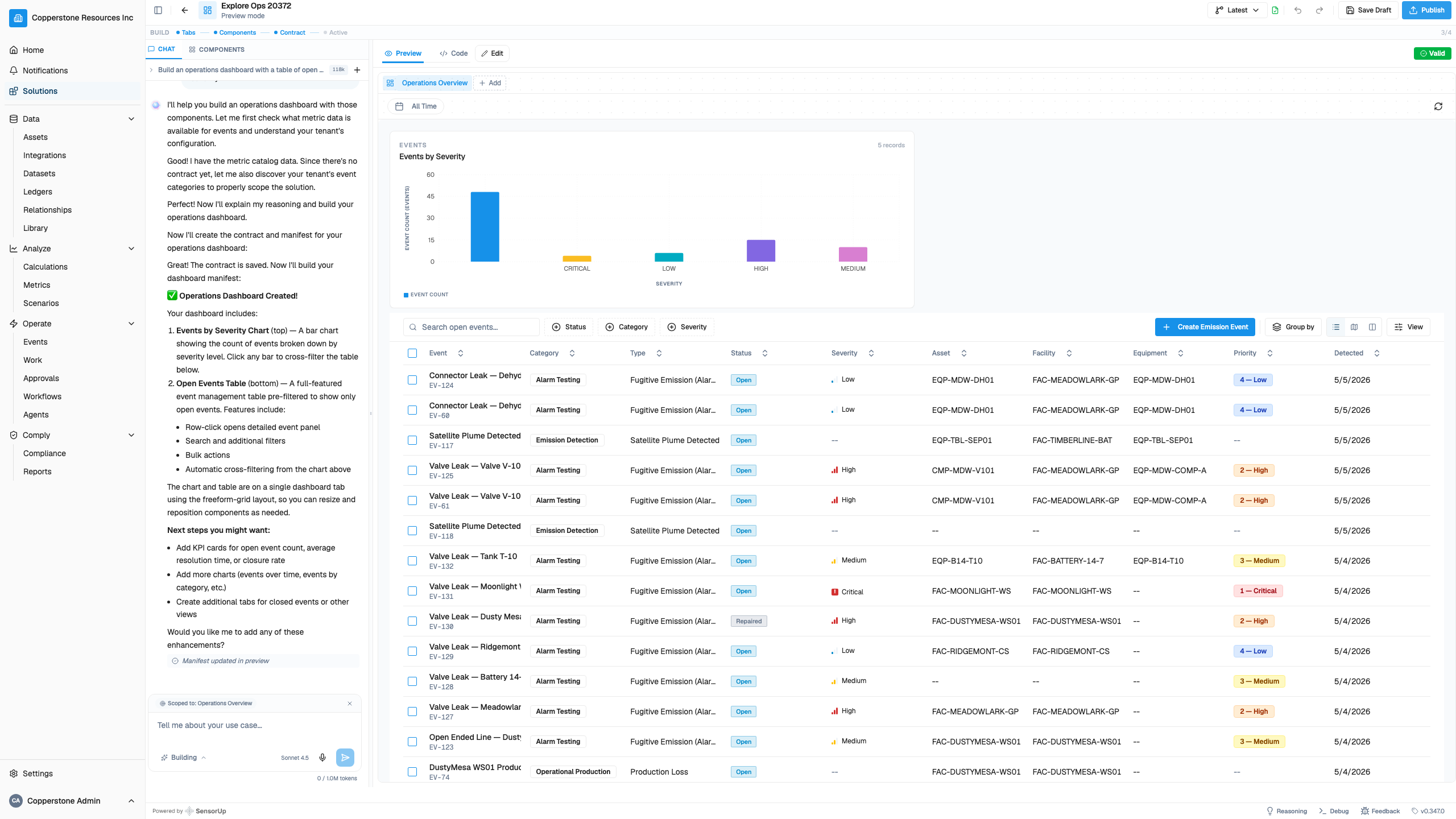
See every detection source land in one triaged event queue
Satellite plume detections, continuous-monitor alarms, and field observations land in one severity-ranked queue instead of scattering across vendor portals, so the highest-impact source is worked first. Each stays one attributable event — tied to the asset and facility it came from and kept on the record — so the queue an operator works is the same record a Subpart W audit reads back.
Talk to an engineer
Bring your detection vendor list and your last reconciliation spreadsheet. We'll walk consume, correlate, and custody against your actual stack, and tell you where the layers will disagree first.