
BCER / SWRS, filed from data you can defend.
File to the BC Energy Regulator from data you can defend: SensorUp composes Observations, Calculations, and an immutable audit trail into the SWRS submission.
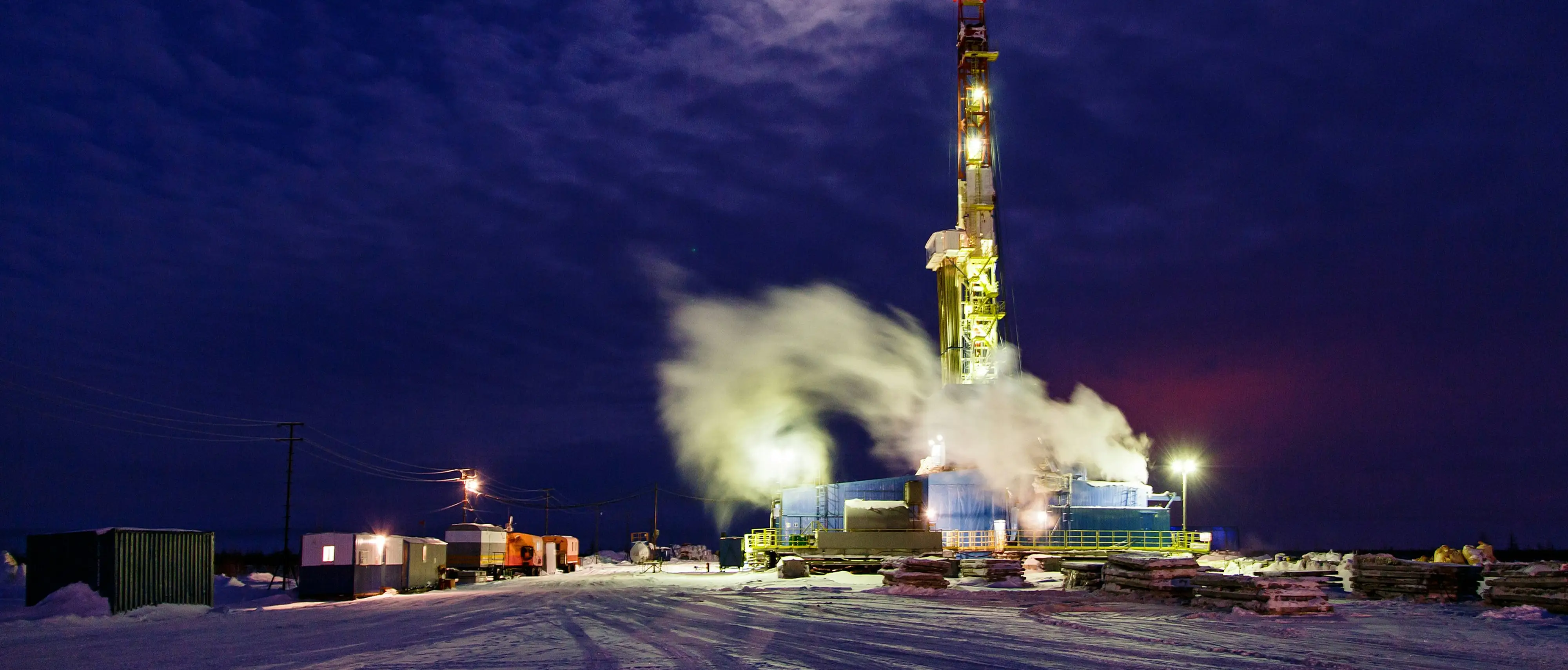
The sources behind the filing don't agree with each other
Historian, survey, and spreadsheet each say a different number.
The historian says one thing, the survey records say another, and the spreadsheet that reconciles them says a third. The SWRS submission asks for a single number anyway, and whoever signs it inherits the disagreement.
Reporting season means retyping operational data into a filing
Every manual step is a place the number can drift from its source.
The data exists. It lives in systems that were built to run the field, not to file to the BC Energy Regulator, so every reporting cycle, someone exports, transcribes, and reshapes it by hand, and every manual step is a place the number can drift from its source.
When the regulator asks how you got the number, the trail is a reconstruction
Copy-paste paths mean the audit trail is rebuilt after the fact.
The question that matters isn't the value, it's the provenance. If the path from source reading to submitted figure runs through copy-paste and personal spreadsheets, the audit trail is rebuilt after the fact, by the person who remembers the most.
Fits your stack
It reads the systems you already run; the BC framework is a composition target, not a new product
Your operational sources, read where they live
Reads SCADA, monitors, OGI, and satellite; nothing punched into OT.
The Warehouse reads your SCADA historians (PI, CygNet) over OPC-UA and Modbus, plus continuous monitors, OGI, and satellite. Ingress is pull-shaped, so nothing new is punched into the OT segment.
consume: PI, CygNet ← OPC-UA / ModbusThe messy export is the expected input
Raw records stay addressable even after they are normalized.
Raw records are kept as ingested, then projected into one canonical model, so the original export stays addressable. Transform does the work the spreadsheet used to: normalization, unit conversions, emission-factor lookups, and data-quality scoring, in a pipeline you can inspect.
raw record → canonical observationThe BC Energy Regulator framework lives in the Library
Rule sets and factors are Library content, not custom code.
Regulatory rule sets, calculation methodologies, and emission factors are Library content, not custom code. BCER / SWRS is a pre-built solution composed in Studio against that framework, the same foundation that serves EPA Subpart W serves the provincial regime without a new procurement cycle.
compose: Library framework → SWRS entryCatch → Prioritize → Resolve
Observations, Calculations, and an audit trail, composed into the SWRS submission
Every reading, linked to the asset it observes
Readings land tied to facilities, wells, and equipment, normalized once.
Source readings land as Observations tied to the facilities, wells, and equipment they describe, normalized once, in one model, instead of exported per reporting cycle. The disagreement between sources becomes visible and reconcilable, with the provenance to settle the argument.
The reported figure derives from its sources, visibly
The submitted number is a derivation you can walk backward.
Calculations run continuously against Observations, using the emission factors and methodologies the Library holds for the framework. The number you submit is not a spreadsheet artifact, it is a derivation you can walk backward, step by step, to the readings underneath it.
One submission, with its audit trail attached
The figure carries its lineage into sign-off, not a reconstruction.
The reconciled figure moves into your team's sign-off and document assembly carrying its full lineage: every input, every transformation, every approver. An immutable audit trail records each change, so the submission inherits a trail an auditor can walk, not a reconstruction built after the request arrives.
The building blocks
The submission is composed from the same blocks
The SWRS submission is assembled in Studio from shared blocks, run by Autopilot on the Warehouse record beneath it. The same blocks serve the federal EPA Subpart W entry and every solution in the catalog.
- Events
- Work
- Calculations
- Compliance
- Scenarios
- Metrics
- Reports
- Agents
- Cora
- Solution Builder
- Workflows
- Assets
- Integrations
- Datasets
- Relationships
- Reference Library
- Ledgers
- Approvals
See it in action
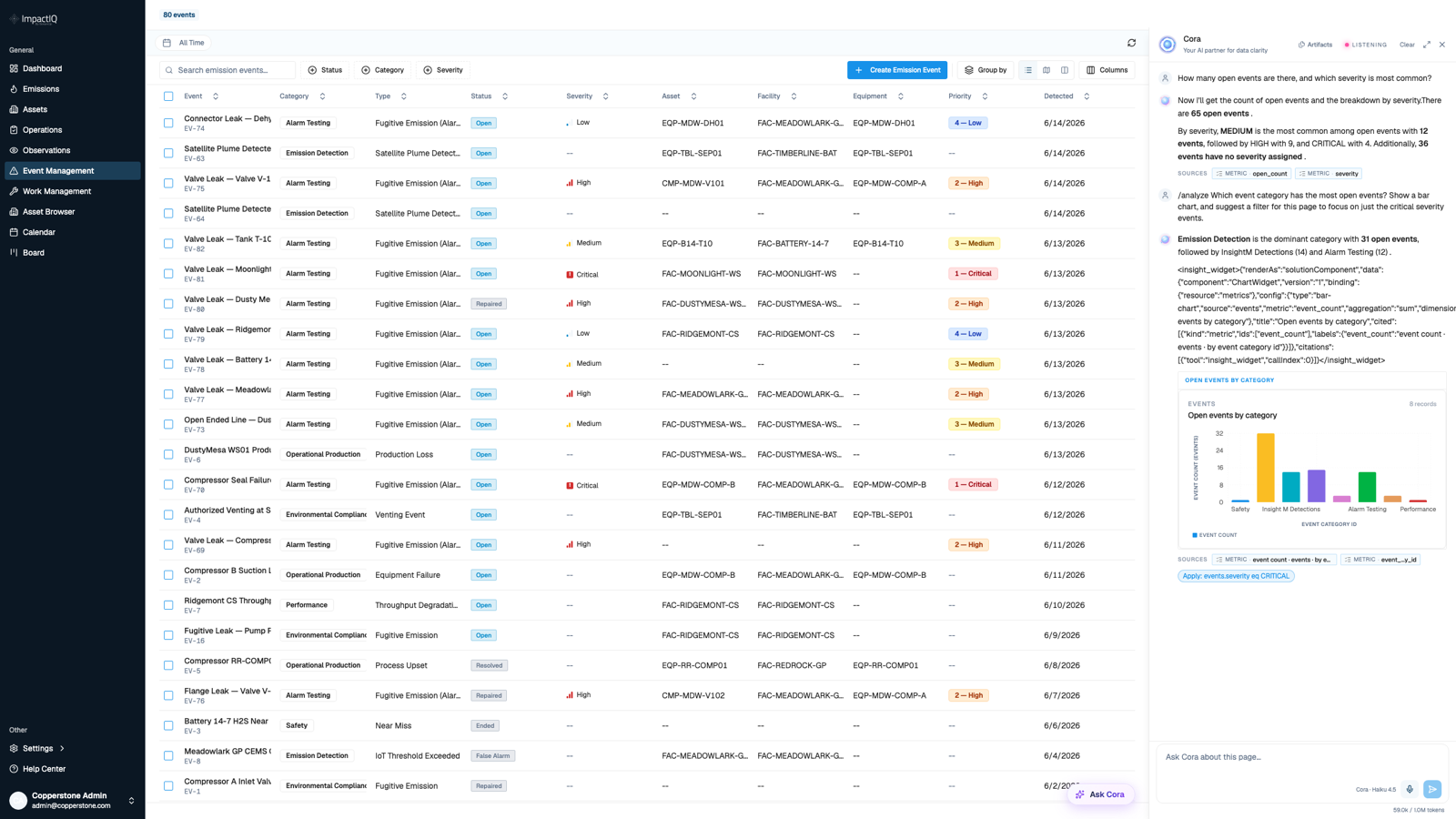
See SWRS-ready numbers reconcile before they are submitted
Meter, SCADA, and survey data reconcile into one figure per stream, filtered to what the B.C. report needs, with custody intact.
Talk to an engineer
Bring the workbook you file from today. We'll map your SWRS submission fields to your actual sources, walk the audit trail end to end.